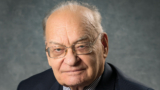
Paul Levaux 1931–2012

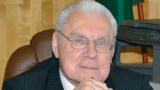
Paul Levaux, a long-standing member of the Belgian delegation to CERN’s Finance Committee and Council, passed away on 3 December 2012.

Paul Levaux first attended the CERN Council and Finance Committee in June 1970 as an adviser, although his association with CERN goes back to the 1960s. From October 1970 until December 2007 he represented Belgium as a delegate to Council and Finance Committee. He was chair of Finance Committee (1971–1973) and president of Council (1975–1978). He also served as vice-president of Council (1978–1980) with a second term from January 1994 until December 1997.

In addition to holding these important offices, Levaux participated in an extensive number of CERN working groups. In particular, he was a member of the Working Group on Procedures for Payment of Member States’ Contributions (2000–2001) and the Working Group on the Review of the Tasks and Working Methods of CERN’s Governing Bodies and Committees (July–December 2003), chair of the Study Group on Pension Fund Governance in 2007, and chair of the Working Group on the Procedure for future Elections of the President of Council and the Chairs of the CERN Committees in 2007.

A substantial part of Levaux’s time at CERN was devoted to matters relating to the Pension Fund. As chair of the Governing Board of the pension fund in the years 1989–2002, he was responsible for organizing and implementing the new structure of the fund, giving it a greater operational autonomy and placing it under the direct authority of the Council. His services in the pension field were recently called on again when he made an important contribution to the setting-up of the new governance structure for the Pension Fund approved by Council in 2007, whose final report now bears his name as the "Levaux Report". As doyen of Council and Finance Committee by a considerable margin, Levaux’s departure as a delegate represented the loss of one of CERN’s most distinguished and long-standing member-state representatives, a true mémoire du CERN.

Throughout his long association with CERN, Levaux remained a strong supporter of the organization and its activities and in honour of his achievements he was invited back to CERN last June for the Council dinner. Gratifyingly, he lived to witness the first results from the LHC, the announcement of which brought him great satisfaction.

CERN management, president and delegates of Council, and his colleagues and friends.


Gordon Fraser 1943–2013

Gordon Fraser, who was editor of CERN Courier for 20 years, passed away on 3 January.

Born in Glasgow, to Ralph Jack Fasht and Ray Braverman, whose parents originally came from Russia, Gordon grew up in the east end of London. His life in physics began at Imperial College London, where he was encouraged to read Paul Dirac’s Principles of Quantum Mechanics and took mathematics as a special subject. With a demonstrated ability in mathematics, he went on to join the theory group of the future Nobel laureate Abdus Salam and obtained his PhD on diffractive scattering in 1967 under Paul Matthews. Gordon then joined the group of Yuval Ne’eman at Tel Aviv University for two years, before returning to the UK and Sussex University, where he met his future wife, physics postgraduate Gill Harbinson.

A radical change in career soon followed in 1969, when Gordon left physics to become a journalist, at first for Computer Weekly in London and later as a freelancer. He moved into scientific editing at the Rutherford Appleton Laboratory in 1975 and it was from there that he was hired to join the publications team at CERN in 1977.

By 1982 Gordon had become the editor of CERN Courier. During his time at the helm, both particle physics and the Courier changed considerably. Under his careful stewardship, aspects of publishing were outsourced, leading to an attractive, professional magazine with a worldwide reputation.

These developments required the creativity and sharp writing skills for which Gordon became well known, not only through the Courier but also through his books about particle physics. The Search for Infinity (with E Lillestøl, I Sellevå) – an illustrated popular introduction to particle physics and cosmology – was translated into nine languages.

Offered a major opportunity by Cambridge University Press to be editor-in-chief of The New Physics for the 21st Century (published in 2006), Gordon took early retirement from CERN in 2002 to concentrate on writing books. A biography of an early mentor, Cosmic Anger – Abdus Salam, the First Muslim Nobel Scientist (CERN Courier September 2008 p55), followed in 2008. His most recent work in a sense a tribute to his family’s origins and dedicated to his father, was The Quantum Exodus – Fugitive Jews, the Atomic Bomb, and the Holocaust (reviewed in CERN Courier October 2012 p49).

A well known figure at CERN, Gordon was also a keen runner and he was often seen powering around the Meyrin site on his lunchtime run. He will be missed by many, especially by those who were fortunate enough to have worked with him and witnessed his skill as a writer. He is survived by his father, his wife Gill and two children, Nathalie and Ben.

His colleagues and friends.