Vladimir Lobashev 1934–2011

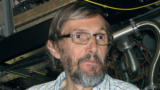
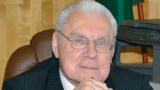
Vladimir Lobashev, who was well known in the field of nuclear and elementary particle physics, passed away on 3 August, after a long illness. He made important contributions to fundamental studies in parity and CP violation, to neutron and neutrino physics, and to medium-energy physics.

The early part of Lobashev's scientific career, at St Petersburg Nuclear Physics Institute of the Russian Academy of Sciences, was dedicated mainly to the weak interaction physics. His discovery of parity-violating effects in nuclear electromagnetic transitions was instrumental in establishing the universality of weak interactions. He was awarded the Lenin Prize for this work in 1974. In the course of this research he discovered and made the first measurements of a new effect in QED – the rotation of the polarization plane of gamma-rays in propagating through polarized electrons. He also designed novel methods of dealing with ultracold neutrons and obtained a limit on the CP-violating neutron electric-dipole moment, which was the best in the world at the time.

In 1972 Lobashev moved to the Institute for Nuclear Research of the Russian Academy of Sciences, Troitsk, where he played a major role in designing and supervising the construction of the complex of intense beams of the Moscow Meson Factory. His most significant recent result is an invention of a new type of spectrometer for beta-decay electrons and an experiment to make a direct measurement of the mass of the electron-neutrino in tritium beta-decay, which together with the Mainz experiment produced the best limit on the neutrino mass.

Lobashev's research was highly appreciated in Russia and all over the world. He was a member of the Russian Academy of Sciences and received many government awards, including the title of Honorary Citizen of the city of Troitsk.

His passing is a great loss to Russian science. He will always be remembered by his numerous former students and colleagues as a great researcher who devoted all of his life to science.

We express our deep sorrow to his relatives and close friends.

Friends and colleagues.


Ryszard Gokieli 1947–2011

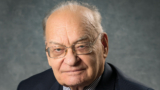
Ryszard Gokieli, a highly valued high-energy physicist and computing expert, passed away on 20 July, after a two-month struggle to recover from a serious heart attack.

Usually seen late at night in his office, with a laptop and a cup of coffee, Gokieli was known to his colleagues and friends as a brilliant researcher, unusually competent and tireless in his work. His friends remember talking to him as a pleasure, enjoying the correctness of his judgements and his specific, subtle sense of humour. His younger colleagues will always recall how helpful he was in both physics and computing matters.

Born in 1947, Gokieli graduated from the University of Warsaw. For most of his career he was employed by the Soltan Institute for Nuclear Studies and was involved in a series of large experiments on the particle colliders at CERN. In the 1970s he worked in the Split Field Magnet Collaboration at the Intersecting Storage Rings, where the production of hadrons at large transverse momenta was observed for the first time, providing evidence for the quark nature of hadronic matter. Then, for about 15 years beginning in late 1980s, he was a member of the DELPHI collaboration at the Large Electron–Positron collider. There his competence in computing was recognized and he became leader of the DELPHI Central Computing effort.

With the advent of the LHC era, Gokieli gradually increased his commitment to the CMS experiment, as a member of the Warsaw group. Once again seduced by the challenges of data processing, he started developing computing Grids. In 2005 he became a member of the CERN-led project, Enabling Grids for E-science, and soon afterwards became the Polish representative in the Worldwide LHC Computing Grid initiative. Setting up a pan-European and worldwide grid for high-energy physics was a major success, but also Gokieli's personal success. Its importance can only be appreciated now that the LHC is gaining impetus and discoveries are round the corner.

In 2009 Gokieli took on yet another big task in organizing and building national computing infrastructure and services for nuclear power plants in Poland. As deputy director he recently devoted most of his enthusiasm to this project – the Computing Centre Świerk – in work that has now been sadly and terminally interrupted.

• Wojciech Wiślicki, Soltan Institute for Nuclear Studies.