Pavel Rehak 1945–2009
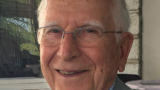
Pavel Rehak passed away on 4 November 2009, after a brief illness. He pioneered far-reaching new concepts in detectors and influenced many individuals and groups around the world.
Pavel obtained a first doctorate in natural sciences at the University of Prague in 1969. He left what was then Czechoslovakia shortly after and from 1969 until 1972 stayed at the Scuola Normale Superiore of Pisa, where he obtained his second doctoral degree, with Italo Mannelli as his thesis adviser. After a year at the University of Karlsruhe, Pavel went to CERN in 1973 to work with W J Willis on experiments at the Intersecting Storage Rings as a research associate at Yale University. These experiments led, among other results, to the discovery of direct photon production in hadron interactions. In 1976 he became employed by Brookhaven National Laboratory and after moving there he put most of his effort into the development of innovative particle and photon detectors and their read-out electronics, while continuing to participate in physics experiments.
Although maintaining a prodigious output in other areas, Pavel's main interest since 1982 has been in semiconductor detectors. In October 1983 he and Emilio Gatti conceived of the idea of the silicon drift detector during one of Gatti's annual, month-long visits to Brookhaven. Their idea went against conventional thinking. All detector experts, when asked if a semiconductor position-sensitive detector based on electron drift over long distances (analogous to the well developed gaseous drift detectors) could work, answered in the negative: "How could you move electrons along a 100 μm thick sheet of silicon over several centimetres without losing them?"
The crucial step suggested by Pavel and Emilio was to realize that a large, very thin sheet of silicon (e.g. of n type with p+ doping on each face) can be depleted of free carriers (electrons in this case) from a tiny n+ contact (an anode about 100 μm in diameter) anywhere at the edge of the sheet. The remaining fixed positive charges create a parabolic potential distribution, with a maximum in the median plane of the sheet. Electrons created by an ionizing particle gather at this potential maximum and can be drifted along the sheet by applying an electric field in the desired drift direction to strip electrodes formed on the surfaces of the silicon sheet. From this basic concept, various geometrical configurations emerged. A large cylindrical drift detector 10 cm in diameter, with radial drift to read-out anodes around the periphery was developed for an experiment at CERN. A large drift-detector system has since been built for the STAR experiment at RHIC at Brookhaven, and the detector technology is one of those included in the ALICE experiment at the LHC.
The concept of depletion of large areas and charge collection over long distances by a small anode has made possible other types of devices. One is the fully depleted charge-coupled device, which has been developed as an efficient X-ray detector for astrophysics experiments at the Max-Planck Institute in Munich and is one of the principal detectors on the X-ray Multi Mirror Mission. Another application is in silicon detectors for X-ray spectrometry, now widespread in industry for trace-element analysis.
Pavel had a deep interest in physics, but most of his work was motivated by his belief that detector developments are among the main forces responsible for progress in physics and other natural sciences. He was truly a renaissance physicist, in that he could delve deeply into various areas of physics. For the past decade he worked on developing new concepts for X-ray detectors for use with synchrotron radiation. During this time his collaboration with younger colleagues flourished, providing inspiration and leaving a deep imprint on everyone who worked with him. He was also a fellow of both the Institute of Electrical and Electronics Engineers and the American Physical Society.
Pavel led an active life. A competitive swimmer in his youth, he pursued this activity with his characteristic tenacity to the end. He was also an avid cyclist and was always eager to take friends sailing. Having participated in the events of 1968 in Central Europe, he closely followed international politics. He maintained fluency in seven languages and had an appreciation for fine arts. Most of all he was generous, honest and caring.
Pavel will be deeply missed by his colleagues and remembered for all that he did and who he was. He is survived by his wife, Margareta, his daughter, Ludmila, and his son Pavel Ludwig.
Veljko Radeka, Brookhaven National Laboratory.