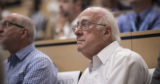
Hector Rubinstein 1933–2009
Hector Rubinstein, professor emeritus at Uppsala University, guest researcher and doctor honoris causa at Stockholm University, passed away on 8 August in his summer house in the Stockholm archipelago.
Hector Rubinstein was born in Argentina and left for the US in the 1950s to study physics. After gaining his PhD at Columbia University he moved to Paris for a post-doctoral position, later taking a faculty position at the Weizmann Institute in Israel.
In his early work, Hector studied the mathematical theory for strong interactions, SU(3), which had just been developed by Murray Gell-Mann, later to become known as the quark model. Later, during a stay at the Rutherford Laboratory in the UK at the beginning of the 1980s, he developed a set of new field-theoretical methods, i.e. sum rules that could be used to calculate particle masses and interactions in QCD, writing a highly cited review on this subject with L J Reinders and S Yazaki in 1985.
While at the Weizmann Institute, Hector attracted a number of brilliant students, among them Gabriele Veneziano, Florian Scheck and Miguel Virasoro. The experimentally established correlations in strong interactions led to the Veneziano model (or dual-resonance model), which was later reinterpreted by Holger Bech-Nielsen and Yoichiro Nambu as a model for strings. In a sense, string theory was born in Hector's research group at Weizmann.
From the early 1970s Hector maintained scientific contacts in Scandinavia (his wife is Swedish), which led to his emigration to Sweden in 1984 and his appointment as professor at Uppsala University. Owing to his scientific reputation and his personal charisma, he became influential in the development of particle astrophysics and string theory in Sweden. Never shying away from controversy or pointing out incongruities, he also made important contributions to the public debate about the quality of physics research in Sweden.
In later years, Hector made a significant mark on the scientific publication process. After realizing early on that the internet would eventually revolutionize the way that physicists would publish their results, he played an important role in the foundation of the Journal of High Energy Physics in 1997, the first in a series of J-journals that earned excellent reputations under Hector's guidance. This is most recently illustrated by the publication of a complete scientific documentation of the LHC machine and detectors in the Journal of Instrumentation.
Apart from particle astrophysics, Hector's later work focused on cosmology, in particular the role of magnetic fields in the early universe. His last paper, written with Vittoria Demozzi and Slava Mukhanov only weeks before his death, addressed the question of whether primordial magnetic fields could be produced in inflation.
Hector remained active after his formal retirement in 2000. In addition to his research and journals work, he became a well respected mentor, always willing to give his advice to young researchers and graduate students. He had a great sense of humour and broad interests and, with his seemingly infinite stock of anecdotes, talking with him was not only worthwhile but also great fun.
He is survived by his wife Helen and his three children and five grandchildren. He will be sorely missed.
L Bergström, J Conrad, A Goobar, P O Hulth, E Mörtsell, Stockholm University and U Danielsson, Uppsala University.
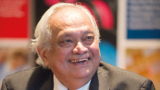
Giovanni Raciti 1949–2009
Giovanni Raciti, full professor of physics at the University of Catania, passed away on 19 August 2009 after almost a year of a strong and patient fight against his illness.
Giovanni was a passionate physicist: for him, physics meant fun to discover, enthusiasm to be shared and perfection to be achieved. He was a real nuclear physicist, having started with nuclear spectroscopy in transfer reactions at Saclay in the late 1970s before moving to higher energies with deep-inelastic and intermediate energy heavy-ion reactions at the Grand Accélérateur National d'Ions Lourds (GANIL) in Caen and at Saclay.
He was among the founders of the ALADiN experiment at the SIS synchrotron at GSI in 1987. The main aim was the systematic study of projectile fragmentation at relativistic energies. The experiment yielded pioneering results on the multifragmentation process and culminated in the determination of the nuclear caloric curve as a first signal of the long predicted liquid–gas phase transition in nuclear matter.
In 2000 Giovanni initiated a project at the Laboatori Nationali del Sud in Catania to produce radioactive ion beams by projectile fragmentation followed by in-flight separation – the in-Flight Radioactive Ion Beams (FRIBs) project. The main goal of the project was to apply a tagging technique by identifying, on an event-by-event basis, each nucleus in the secondary beam "cocktail" before it impinges on the reaction target. He discovered the diproton radioactivity of 18Ne only a few years ago, from the analysis of the first experiment conducted with these exotic species.
Giovanni was a member of several national and international evaluation committees, a referee of scientific journals and the spokesperson of numerous experiments and international projects. But most of all he was a teacher who inspired his students with his deep insight into physics and his enthusiasm for research. With his passing we have lost a passionate, deeply caring physicist, who always aimed for perfection. We will remember his warmheartedness, patience, honesty and humanity, and we will remember his smile to help us overcome our grief.
Titti Sfienti, University of Catania, and Uli Lynen, GSI.