Guy von Dardel 1919–2009

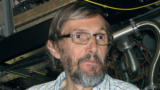
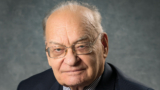
Guy von Dardel, a well known figure at CERN and in the international particle-physics community, passed away on 28 August.

Born on 26 August 1919 in Stockholm, Guy von Dardel went on to study at the Royal Institute of Technology, obtaining his doctorate in 1953 with a thesis titled "The Interaction of Neutrons with Matter studied with a Pulsed Neutron Source". During his studies he was employed by SAAB, the National Defence Research Institute, and Atomic Energy Ltd.

He came to CERN at its beginning in 1954 and was a full-time staff member until 1964, performing several experiments and working on technical developments. In particular, he carried out the first measurement of the neutral pion's lifetime, an experiment known to all who study particle physics at university level.

Called to Lund University in 1964, he became professor there in 1965 and director of the 1.2 GeV electron accelerator. This machine marked the start of the accelerator competence at Lund University that later developed into the MAX-lab for photon science.

In the late 1960s, he performed an experiment at CERN's PS that measured the decays of the Λ. Then, in the early 1970s, he involved the Lund group in a series of experiments at the Intersecting Storage Rings (ISR), which at the time provided the world's highest-energy particle collisions. There, he measured the production of various types of particles, and in particular participated in a series of experiments that observed the production of a high abundance of particles with large transverse momenta, which required an explanation in terms a substructure in the colliding protons.

Guy von Dardel initiated the Scandinavian ISR Collaboration, which included the Niels Bohr Institute in Denmark and Bergen University in Norway. He also initiated the participation of some of the Lund group in an experiment at DESY. Further experiments followed there, but he did not himself participate in these.

He was chair of the European Committee for Future Accelerators (ECFA) from 1976–1977. During this period he was instrumental in starting CERN's preparations for the Large Electron Positron (LEP) collider. He was later involved in the L3 experiment at LEP.

In the mid-1980s, together with James Cronin, he conducted a new version of the experiment that measured the lifetime of the neutral pion. The result was consistent with the first measurement, but with an order of magnitude better precision.

As a scientist, Guy von Dardel was characterized by his large flow of ideas; ideas for physics experiments and ideas about instrumentation. He was also strong in providing rapid and rough estimates, an important ability when discussing new ideas. He was an inspiration for all of those he worked with.

His half-brother Raol Wallenberg disappeared at the end of the Second World War after having saved tens of thousands of Jewish lives. Guy von Dardel was dedicated to finding out his brother's fate. He made countless journeys to the Soviet Union and Russia for discussions and to examine records, taking the initiative for many actions, and he compiled an extensive archive regarding his brother's fate.

We share our sorrow with his family and convey our deepest condolences to his wife Matilda and the rest of his family.

His colleagues and friends.


Sam Lindenbaum 1925–2009

Sam Lindenbaum, whose distinguished career at the Brookhaven National Laboratory (BNL) spanned 45 years, died on 17 August 2009.

Born in New York City, Lindenbaum earned a bachelor's degree in physics from Princeton University in 1945, followed by a master's degree and PhD from Columbia University in 1949 and 1951, respectively. He joined BNL in 1951 and he soon began experimental research at the Cosmotron, where he developed the first differential gas Cherenkov counters at this machine and proposed a theory known as the nucleon "isobar model" to explain the dominant features of high-energy pion production. He also designed the radiation protection shielding for the Cosmotron, proposed the basic parameters of the Alternating Gradient Synchrotron (AGS) shielding and was a consultant on many other high-energy shielding projects.

In 1959, Lindenbaum formed a new group to develop a novel approach to study basic high-energy interactions, which required handling the high data rate made possible with electronic detector arrays and rapid automatic processing of complex particle interactions. The team developed an online computing technique that fulfilled these requirements and, in 1962, it performed the first online computer experiments at the AGS, using scintillation counter hodoscopes. This work led to the founding of the On-Line Data Facility, which was used both by universities and by BNL groups, with Lindenbaum as group leader.

During the 1960s Lindenbaum and his group exploited online techniques further in experiments at the AGS. Their research included investigations of pion–nucleon forward dispersion relations that proved the validity of a basic axiom of modern relativistic field theory. They also found that the A2 meson was not "split", thus helping to confirm the validity of the quark model.

In 1970, Lindenbaum became co-group leader of the Particle Spectrometer Group with his long-term collaborator, Satoshi Ozaki. With help from university user groups, the group designed and constructed the Multiparticle Spectrometer (MPS) at the AGS, a 700-tonne large-acceptance particle detector with high-speed electronic sub-detector systems that enabled detection of rare events. A more powerful successor, MPS II, followed in the late 1970s. Using MPS II, the team discovered direct evidence for glueballs.

Following the cancellation in 1983 of the proposed high-energy collider, ISABELLE, at BNL, Lindenbaum worked on a time-projection chamber, for a new relativistic heavy-ion programme at the AGS and he began to focus his attention on magnet design and detector technology for the Relativistic Heavy Ion Collider (RHIC). As a member of the STAR collaboration at RHIC, Lindenbaum, along with Ron Longacre at BNL, was interested in a theoretical interpretation of particle interactions at RHIC. Together they studied the fluctuations and correlations in relativistic heavy-ion collisions to search for indications of "bubbles" of quark–gluon plasma that might be created prior to the formation of hadrons. They published a paper on their theory, and another paper was pending at the time of Lindenbaum's death.

In 1970, Lindenbaum became a faculty member at the City College of New York (CCNY), while retaining a joint appointment at Brookhaven. He retired from CCNY in 1995, but held the title of professor emeritus at the college from 1998. He retired from BNL in 1996, returning in 1998 as a guest senior physicist to continue his research as part of the STAR collaboration.

Lindenbaum was highly appreciated by his colleagues as a great scientific thinker and a source of new and innovative ideas. He was also a fierce defender of scientific freedom and enjoyed spirited scientific and philosophical debates. His brother, Stanley Lindenbaum, a niece, Karen Koevary, and a nephew, Michael Kimmel, survive him.

Diane Greenberg, BNL.