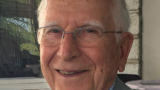
Helmut Faissner, one of the pioneers of neutrino experiments at CERN, died on 3 August 2007 aged 79.

Faissner was born in Kempten in southern Germany and studied physics at the University of Heidelberg. He passed his Diploma of Physics examination in February 1952 and obtained a PhD in October the same year. His thesis on the anomalous dispersion of the lines of yellow-green bromium vapour was under Walter Bothe, and his theory teacher was Hans Jensen. This led to a position as assistant at the Max Planck Institute near Heidelberg under the direction of Bothe.

Faissner gained a position as research associate at CERN in June 1958 and joined a team studying the capture of negative pions in carbon-12. He spent most of his time finishing off studies he had begun earlier, mainly on the spallation of heavy nuclei by 600 MeV protons. He became a staff member at CERN in June 1959, and the following spring joined a group of physicists who were investigating the experimental possibilities of detecting high-energy neutrinos, under the direction of Gilberto Bernardini. In addition, Faissner was given the task of setting up a neutrino-counter group.

The first neutrino experiment at CERN operated from 1963 to 1964 in an external proton beam. It used magnetic focusing on the produced pions, and had spark chambers and a heavy-liquid bubble chamber as detectors. The results that Faissner obtained included the first evidence of an electron-neutrino (νe) and solid evidence beyond doubt of the muon-neutrino (νμ).

At the end of 1963, Faissner accepted a position as full professor at RTWH Aachen, and in the summer of 1964 he began lecturing on weak interactions, symmetries and other topics of elementary-particle physics. The same year, Murray Gell-Mann put forward the quark model of particles and Faissner soon began a search for quarks in cosmic air showers carrying a characteristic electric charge of 1/3 – but without success. He then joined the effort to study neutrino physics using the Gargamelle bubble chamber at CERN. This made the first observations of weak neutral currents by detecting elastic scattering events νμe → νμe and one event of νμe → νμe. It was Faissner's student at Aachen, Franz-Josef Hasert, who recognized the first candidate νe → νe in December 1972. The statistics were later improved on by building an experiment with a massive spark chamber as detector. In 1980, Faissner was awarded the Max-Born prize jointly by the UK Institute of Physics and the German Physical Society for his contribution to the physics of high-energy neutrinos and to the discovery of the weak neutral current.

Faissner leaves behind his wife, Ursula, two sons and a daughter. He will be remembered as a kind person by all who worked with him and he will be missed sorely by all of his friends.

Klaus Winter, Gland.